












Viktor Orban’s dilemma – Russian oil or Trump’s favour
2025-11-07 01:38:21
Nick ThorpeBudapest Correspondent

 Reuters
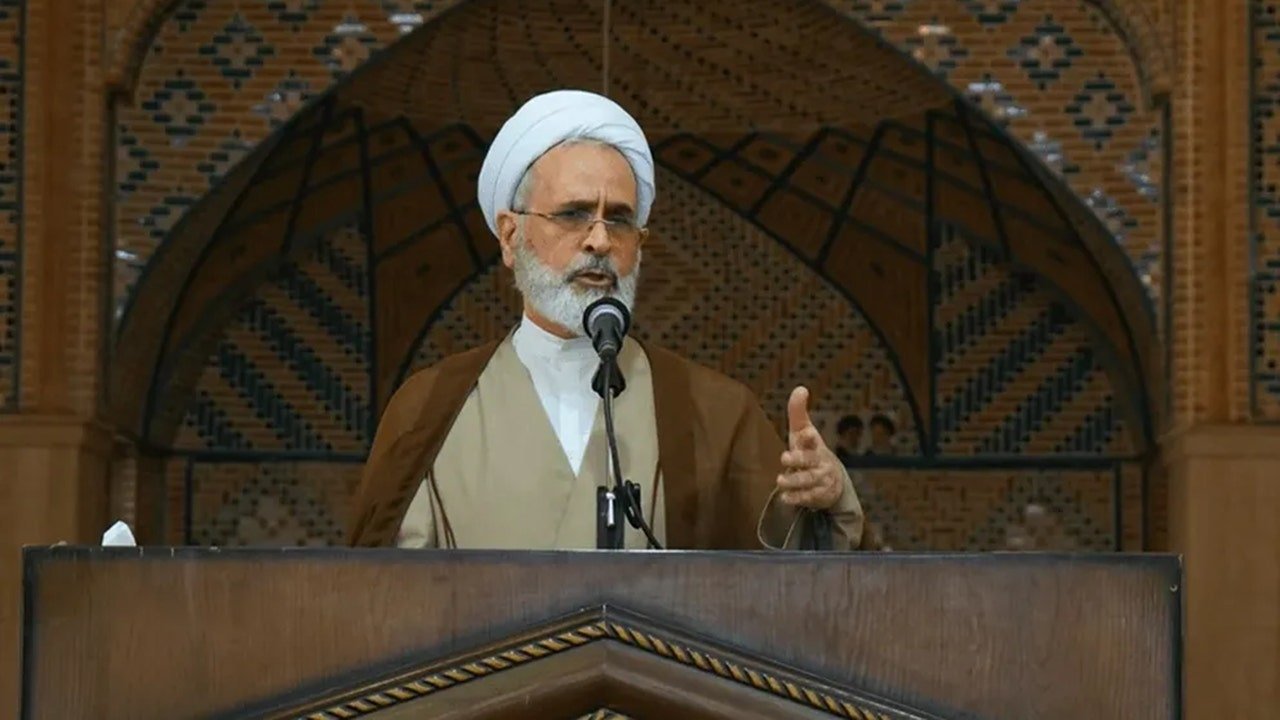
Viktor Orban said last week after meeting with Pope Leo in the Vatican: “There is a network opposed to war in the world, which has two focal points: one for power led by the American president and one for the spirit that is here with the Holy Father.”
“We draw strength, motivation and blessing from both of them,” the Hungarian Prime Minister said.
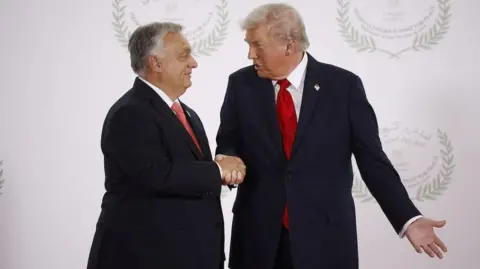
If his ally in the White House, US President Donald Trump, had been on his mind, his thoughts could have turned to a difficult meeting awaiting him on Friday in Washington.
The man whom Trump described as a “great leader,” and who has long impressed MAGA circles, suddenly finds himself in an unusual position — at odds with the US president over an issue of crucial importance.
At the heart of these talks will be new US pressure on Hungary and Slovakia to urgently stop their dependence on Russian oil, which is Trump’s latest maneuver in his efforts to pressure Russia to end its war on Ukraine.
Asked recently whether Trump had gone too far in imposing sanctions on Russia’s two largest oil companies, Orban said, “Yes, from the Hungarian point of view.”
Orban has used his country’s heavy dependence on Russian oil and gas to advance his own agenda in several ways.
He has used it as a weapon to attack Brussels, a way to maintain his good relations with Moscow, and a platform from which he hopes to win re-election next April in Hungary. He promised voters “cheap Russian energy.”
He will run this election portraying himself as the safe person in an increasingly uncertain world. But Orban is trailing in most opinion polls, after his government was shaken by the rapid rise of opposition TISA leader Peter Magyar.
The Hungarian Prime Minister also expressed anger at repeated Ukrainian drone attacks on the Druzhba pipeline this summer, which briefly interrupted supplies to his country.
Senior Hungarian officials had been hinting for months that they believed the war in Ukraine could end by the end of the year — a seemingly absurd claim, until news broke of a planned summit in Budapest between Trump and Russian President Vladimir Putin last month.
But Orban’s carefully crafted plans began to unravel on October 21, when the White House announced the cancellation of the summit.
Orban’s government has been secretly working on summit plans for months. Balázs Orbán, Orbán’s political director (no relation), has close ties to US Vice President J.D. Vance, and is believed to have played an important role.
Orban hopes to persuade Trump to ease pressure on Hungary at least until the elections when the two leaders meet in Washington.
The Hungarian government appears to be counting on the idea that Trump is bored with the war in Ukraine and wants to turn his back on it if an agreement is not reached soon.
Orban strongly opposes Western military and financial support for Ukraine, and rules out Ukraine’s membership in NATO and the European Union. It portrays Trump as a pro-peace president who cares little about what he sees as warmongers in the European Union.
The climax of the canceled summit in Budapest would have been the moment he appeared on the balcony of the Carmelite Monastery on Castle Hill, overlooking the Danube River, flanked by Presidents Trump and Putin. He may have wondered how Hungarians could vote against such an internationally successful leader.
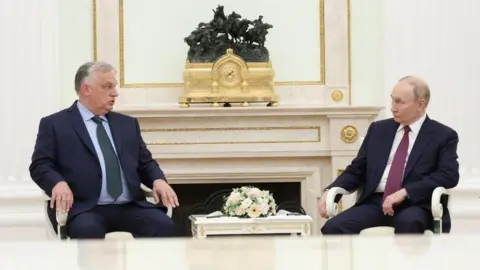
In Rome last week, despite American rejection, Orban insisted that the summit would take place, and it was just a matter of time. Over the weekend, Kremlin spokesman Dmitry Peskov quietly suggested the same thing.
Under American pressure, will Orban follow the Czech example?
The biggest issue troubling relations between the United States and Hungary is oil.
In 2024, Hungary will increase the amount of oil it receives via the Druzhba (Friendship) pipeline from Russia. On October 23, while Orban was addressing a crowd of his supporters in front of Parliament in Budapest, the United States announced sanctions on the two giant Russian oil companies, Lukoil and Rosneft.
Hungary received 64% of its oil via the Friendship Pipeline from Russia, via Belarus and Ukraine, in 2020. By 2024, this figure had reached 80%, or 5 million tons per year.
The Hungarian government claims that land pipelines are the cheapest way to receive oil, and that it has no alternative in the absence of its own sea coast. Much smaller quantities are also imported from Kazakhstan, Croatia, Iraq and Azerbaijan.
Another problem is that Russian Urals crude contains a higher sulfur content than Brent crude imported from elsewhere. The main Hungarian refinery in Sazahalombata, operated by Hungarian oil giant MOL, and the Slovnaft refinery in Slovakia, also operated by MOL, are built to process mostly Urals crude, not Brent.
Within the European Union, Orban is now the longest-serving leader. Far from leaving the bloc, he wants to remake it in his image, as a union of sovereign states. For this reason, he also received praise from Putin.
But Hungary’s argument that it is incapable of change is undermined by the Czech model. It is a country with a similar population to Hungary, and is also landlocked.
The Czech Republic traditionally relies heavily on Russian crude to obtain the eight million tons of oil it needs annually.
Starting in early 2022, following Russia’s large-scale invasion of Ukraine, the Czech government under Prime Minister Petr Fiala invested heavily in improving the existing Trans-Alpine pipeline to the Italian port of Trieste.
Meanwhile, its refineries in Kralubi and Litvinov have been adapted to use Brent crude. In April 2025, the Czech authorities proudly announced that they would no longer receive a drop of Russian oil.
Energy experts say that while the Hungarian oil giant, MOL, is quietly changing its technology, what is missing is a political decision from the government to switch to the Adria pipeline from the Croatian port of Umisalj.
There are also disagreements between the Croatian company Janaf and MOL, over how much oil the pipeline can support.
 Reuters
When the two leaders meet, Trump will urge Orban to show some political will to stop his dependence on Russian supplies.
But Orban may believe that explaining this decision to Hungarian voters will be a difficult decision. Having argued for years that Hungary could not survive without Russian oil and gas, he would lose face if it turned out that it could.
Matt Whitaker, the US ambassador to NATO, said in an interview with Fox News last week that Hungary “has not yet taken any effective steps” to end its dependence on Russian oil.
“There is a lot of planning that our friends in Hungary need to do,” he said, promising US help for Hungary and Croatia to achieve this.
As the seagull flies, Omisalj is only 44 miles (70 km) from Trieste. Oil transported by sea from Kazakhstan, Libya, Azerbaijan, the United States and Iraq could soon flow through the Adria pipeline to Hungary as well.
Despite Orban’s dire warnings about rising prices, there is no data – at least not yet – to suggest that Czech consumers should pay more.
There’s nothing his old friend Donald Trump would love more than to reach a deal.
Orban is about to discover how persuasive the US president is.
https://ichef.bbci.co.uk/news/1024/branded_news/144a/live/ec3a12c0-bbbc-11f0-aa13-0b0479f6f42a.jpg










إرسال التعليق