











Israel bill proposing death penalty for those it deems terrorists passes first reading
2025-11-11 14:41:00
Yolande KnellMiddle East correspondent in Jerusalem

 Environmental Protection Agency
Israel’s parliament has passed the first reading of a bill proposing to impose the death penalty on those it deems terrorists acting against the state — a requirement that means it will likely only be used against Palestinians convicted of deadly attacks on Israelis.
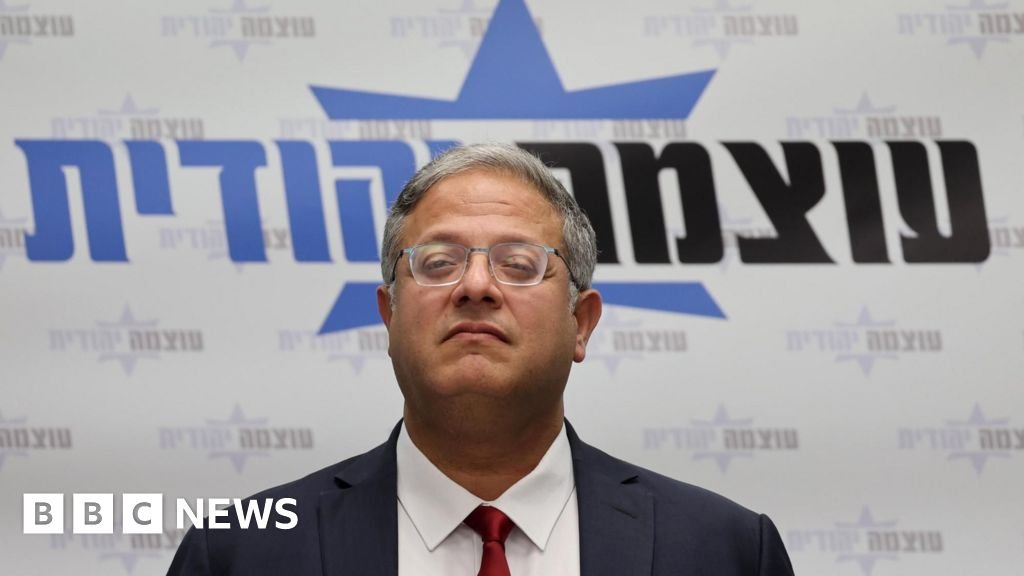
Far-right National Security Minister Itamar Ben Gvir — whose Jewish Power party brought the vote — celebrated late Monday by handing out candy after the bill was approved in the 120-seat Knesset by a vote of 39 to 16.
“After the law is finally passed, terrorists will only be released to hell,” he said.
The bill must pass two additional readings before it becomes law.
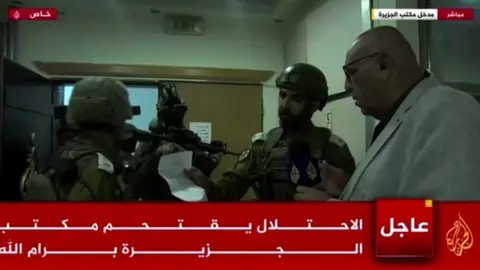
In the same session, the Knesset also approved the first reading of another controversial bill that would allow the Israeli government to shut down a foreign media outlet without court approval. The vote came with a majority of 50 supporters and 41 opponents.
The legislation aims to transform the temporary order that allowed the closure of the Qatari-owned Al Jazeera channel in May 2024, into a permanent law. The government’s legal advisers opposed it.
While the death penalty exists for a small number of crimes in Israel, it has only been used twice since 1948 when the state was established. The last time was when the Nazi war criminal Adolf Eichmann was executed by hanging in 1962, after a public trial.
The Jewish Power Party demanded that the Penal Code be amended, and it was signed by the Knesset National Security Committee, which said in a statement that its purpose is “to eliminate terrorism in its bud and create a strong deterrent.”
“It is proposed that a terrorist convicted of murder motivated by racism or hatred toward the public, and under circumstances in which the act was committed with the intent to harm the State of Israel and the rebirth of the Jewish nation in its homeland, should be sentenced to the death penalty – mandatory,” the statement read.
The provision for harming Israel makes it likely that Palestinians convicted of deadly attacks, rather than Israeli Jews, will be sentenced to death.
The Foreign Ministry of the Palestinian Authority – which governs parts of the occupied West Bank – described the proposed law as “a new form of escalating Israeli extremism and criminality against the Palestinian people.”
 Reuters
Ben Gvir has long pushed for the death penalty bill to be put to a vote in the Knesset, but such a move has previously been opposed by Israeli political and security leaders who said it could complicate efforts to release living Israeli hostages held by Hamas in Gaza.
This has ceased to be a concern since their return after the start of the ceasefire in Gaza last month.
Ben Gvir was one of the few Israeli ministers to vote against the Gaza ceasefire agreement aimed at ending the war. This saw the repatriation of 20 alive hostages in exchange for some 2,000 Palestinian prisoners, including about 250 serving life sentences, many of whom were convicted of killing Israelis.
“A dead terrorist is not released alive,” commented Limor Son Har-Melik, a member of the Jewish Power Party and sponsor of the bill.
In 2003, during the Second Intifada, or Palestinian uprising, Har Melek and her husband — who were living in a settlement in the occupied West Bank — were attacked by Palestinian gunmen while in their car. Her husband was killed and she was injured, resulting in her being born by emergency caesarean section.
She told the Knesset that one of her husband’s killers was released in a previous exchange deal to return a captured Israeli soldier in Gaza. It said he continued to lead a deadly attack on another Israeli and participated in Hamas-led attacks on October 7, 2023, before he was killed during the Gaza war.
In response to the draft law, Palestinian human rights organizations said that its “most troubling aspect” is that if it becomes law, it could be used to apply it retroactively.
They indicated that its goal is “to carry out mass death sentences that could target hundreds of Palestinian detainees from the elite forces of the Al-Qassam Brigades who were arrested on or after October 7,” in reference to the military wing of Hamas.
The Israeli Minister of Justice has already said that he is seeking legislation in the Knesset to establish a special criminal court to try Gazans accused of involvement in the October 7, 2023 attacks, in a process that could lead to death sentences for those convicted.
About 1,200 people were killed two years ago in a cross-border attack on southern Israel by several thousand armed Hamas fighters. In the war it sparked, the Hamas-run Health Ministry said more than 69,000 people were killed in Gaza.
 Reuters
The push by Israeli lawmakers to formalize what has become known as the “Jazeera Law” also comes after the Gaza ceasefire.
During the war, a ban imposed by the Israeli Ministry of Communications forced Al Jazeera to close its office in a hotel in occupied East Jerusalem. The Israeli army then ordered the closure of the network’s office in the West Bank city of Ramallah, claiming that it poses a threat to national security.
Israel accused Al Jazeera of bias against Israel and supporting Hamas in its news coverage. Al Jazeera has repeatedly denied these accusations and condemned Israel’s actions.
New international media legislation would give the government permanent powers to stop foreign broadcasting in Israel, even outside times of war or national emergency, and would also eliminate the need for judicial oversight.
Last year, when petitioning the High Court of Justice against the temporary order allowing sanctions to be imposed on foreign broadcasters, the Association for Civil Rights in Israel (ACRI) said that “the law violates freedom of expression, the right to information and freedom of the press, and prevents citizens and residents from receiving a variety of information that does not fit the Israeli narrative or is not broadcast on Israeli media channels.”
It is expected that the two controversial bills will be prepared for the second and third parliamentary readings.
https://ichef.bbci.co.uk/news/1024/branded_news/8840/live/f0889830-bee4-11f0-8456-eff94716b162.jpg














إرسال التعليق