











How a cheese ban drove a new wedge between the UK and EU
2025-10-26 06:52:51
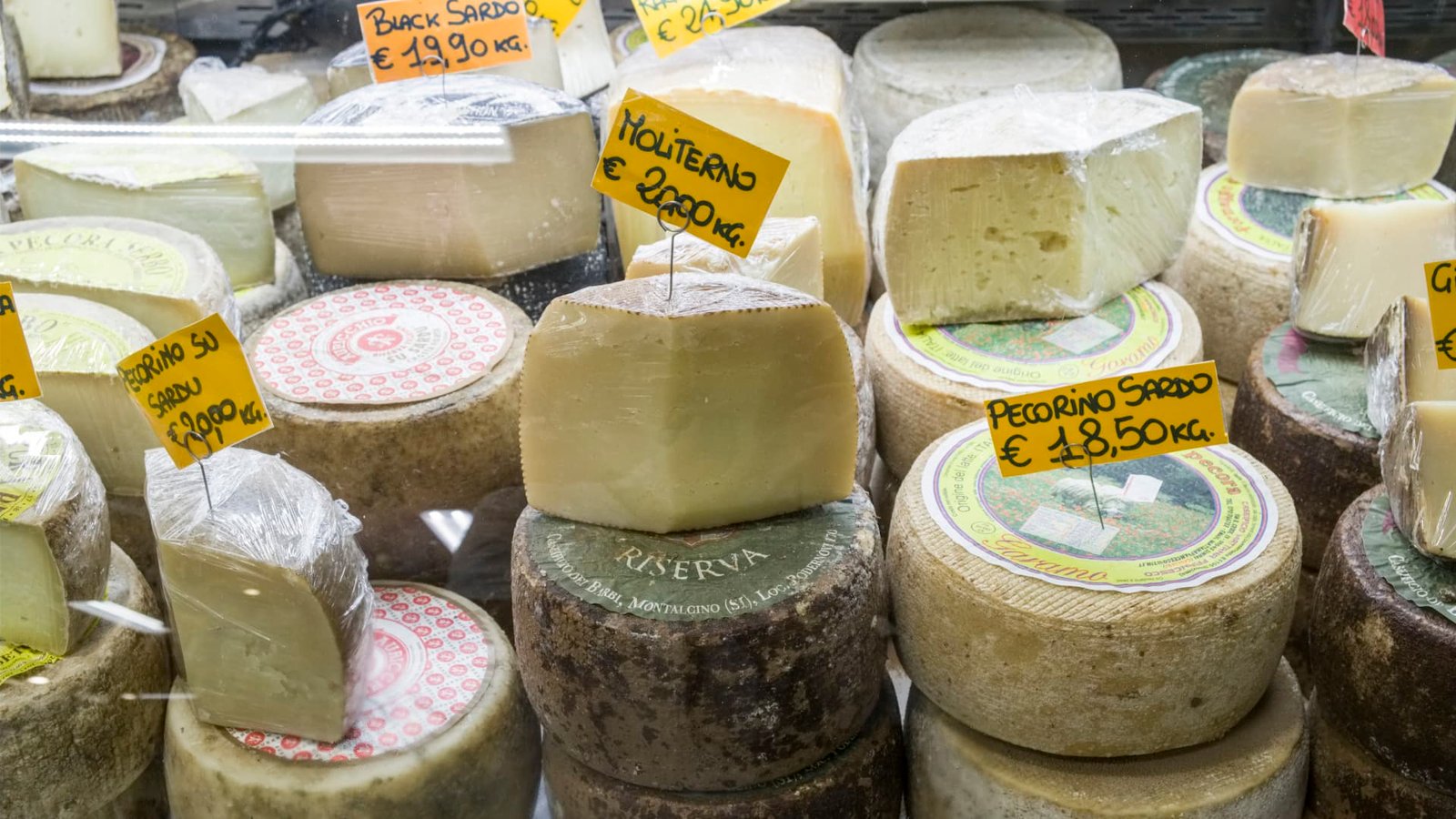
European consumers face higher prices when going to the supermarket.
India | Global Photo Collection | Getty Images
Relations between the UK and the EU are arguably at their best since the Brexit vote in 2016, but there is a persistent cold front between the neighbors over a ban on imports of continental cheese and meat.
In April, Britain banned people from bringing all dairy products and a range of meat from the European Union into the country for personal consumption, saying the ban was necessary to prevent the potential spread of foot-and-mouth disease among British livestock following an outbreak in Europe earlier this year.
British holidaymakers traveling to the continent have been warned not to bring home food items such as cheese, chorizo, serrano ham or sandwiches containing any of these items. A wide range of prohibited productsEven if it is stamped or purchased from duty free shops at airports. The ban extends to cakes, biscuits and chocolate that contain a high percentage of unprocessed dairy products or fresh cream.
Those found with prohibited items were told they must hand them over at the border, or have them confiscated and destroyed. The government said anyone who violates the restrictions could receive a fine of 5,000 pounds (about $6,700).
The UK said the British ban does not apply to commercial food imports because they are subject to more stringent biosecurity requirements, such as heat treatment and veterinary health certificates.
Cheese shops in Paris – especially those around Gare du Nord station where Eurostar trains travel to and from the UK – say the restrictions have affected sales to a vital customer base.
“Tourists are very important, especially the English,” Alexandre Vilaca, founder and director of Fromagerie Ferdinand in Paris, told CNBC, noting that when he opened his cheese shop eight years ago, he chose the Gare du Nord neighborhood for his international visitors.
“In the last few years, it has been very important to have English customers,” he said. “We vacuum-packed the cheese so they could easily travel to the UK, and we started having regular customers who used to stop by our store to give some gifts to families and friends… But a few months ago, customers told me that it was forbidden to bring the cheese back home.”
“This has had a significant impact on our sales to customers in the UK,” he added.
A cheese seller works in a cheese shop in Paris, France in 2022.
Bloomberg | Bloomberg | Getty Images
Villaca said the ban was largely illogical, given that French authorities were “very strict” about health controls and regular checks on cheese producers, their products and their distribution. He noted that the English cheese producers Vilaka worked with were also upset by the ban.
“We’re proud when customers take home some souvenirs, maybe some wine or some cheese – a little bit of France in their bags, so to speak. So we don’t understand [the ban]”We’re very upset and that’s bad news because it’s not great for business.”
Why the ban?
A temporary ban on continental food products entering or leaving the UK, or vice versa, is nothing new, and it is worth noting that the EU imposed a permanent ban on Britons bringing animal and dairy products, for personal consumption, into the bloc after Brexit for the same reasons: to prevent the spread of disease.
Foot-and-mouth disease, or foot-and-mouth disease, is a serious concern for a close-knit continent like the European Union because it can spread very quickly, especially given the region’s interconnected agricultural market and multiple transmission routes.
Foot-and-mouth disease is not dangerous to humans but is highly contagious to cattle, sheep and pigs, with the disease able to spread rapidly between livestock, with devastating consequences.
An outbreak of foot-and-mouth disease was confirmed in Germany, Hungary and Slovakia earlier this year, but was contained after the countries quickly implemented animal health control measures in affected institutions, including livestock culls and protection and surveillance areas.
Don’t risk it: Cars pass through a disinfection checkpoint set up at the border crossing between Hungary and Slovakia on March 28, 2025 in Medvedov, Slovakia. The country declared a state of emergency after several cases of foot-and-mouth disease emerged in the region, including a new outbreak discovered in Hungary, near the Slovakian border near Bratislava.
Robert Nemiti | Getty Images News | Getty Images
These emergency measures were lifted after Germany was lifted He was declared free of foot-and-mouth disease In April, Hungary and Slovakia have not experienced any new outbreaks since April.
In late July, the UK government’s Department for Environment, Food and Rural Affairs (Defra) announced He said in the evaluation “Although the incursion of foot-and-mouth disease into Europe earlier in the year was undoubtedly worrying, there have been no further reports since April, suggesting that the situation in Hungary and Slovakia is under control.”
While the report’s authors said the risk of foot-and-mouth disease introducing into the UK was, in July, considered a “low” risk (rare but can happen), the report warned that foot-and-mouth disease could remain undetected for months.
The UK government told CNBC that although the foot-and-mouth disease outbreak in Europe has been contained, the ongoing ban on personal imports of cheese and many meats is intended to protect British farmers and the UK’s food security.
“Earlier this year, we took immediate action to ban personal imports of meat and dairy products from Europe following a spate of foot-and-mouth disease cases. We are also investing £1 billion [$1.3 billion] “In a new national biosecurity center to strengthen our world-leading facilities and protect our farmers, our food supply and our economy,” a Defra spokesperson told CNBC.
The spokesman added: “We will do everything necessary to protect our farmers from animal diseases.”
However, nearly six months into the ban, questions are being raised about whether the ongoing restrictions are excessive and no longer necessary.
Defra stressed that it is not alone in implementing the current restrictions, and that it is only doing what the European Union has been doing for several years, since Britain’s exit from the European Union, as standard practice.
Asked when the ban might be lifted, given that FMD cases were now contained on the continent, Defra said the government’s “response to FMD remains under constant review” and that it would “retain restrictions in England while personal imports of affected products pose biosecurity risks to Great Britain.”
Hard lessons
The UK and EU have learned the hard way what an outbreak of foot-and-mouth disease can cause.
Brier cattle farm cows are photographed on a farm near Budapest on March 11, 2025. Hungary detected its first foot-and-mouth disease outbreak in more than 50 years on March 7, 2025, on a cattle farm near the Slovakian border. The country’s food safety agency has taken very strict measures to prevent further spread of the disease, including a ban on the movement of susceptible species.
Ferenc Eza | AFP | Getty Images
The 2001 epidemic, which first broke out in the United Kingdom before spreading to the continent, had a devastating impact on the British agricultural community with more than six million animals destroyed and is estimated to have cost the UK public and private sectors a combined £8 billion.
In the European Union, four million animals were destroyed, and the outbreak is estimated to have cost member states 2.7 billion euros In terms of eradication measures and compensation to farmers.
The last outbreak in the UK was only in 2007 Eight farms affected But it was Its cost is estimated at 147 million pounds sterling In general, due to the ban on the movement of livestock on a large scale.
https://image.cnbcfm.com/api/v1/image/107083595-1656657353246-gettyimages-1371876625-1009_29_374950.jpeg?v=1656657435&w=1920&h=1080












إرسال التعليق